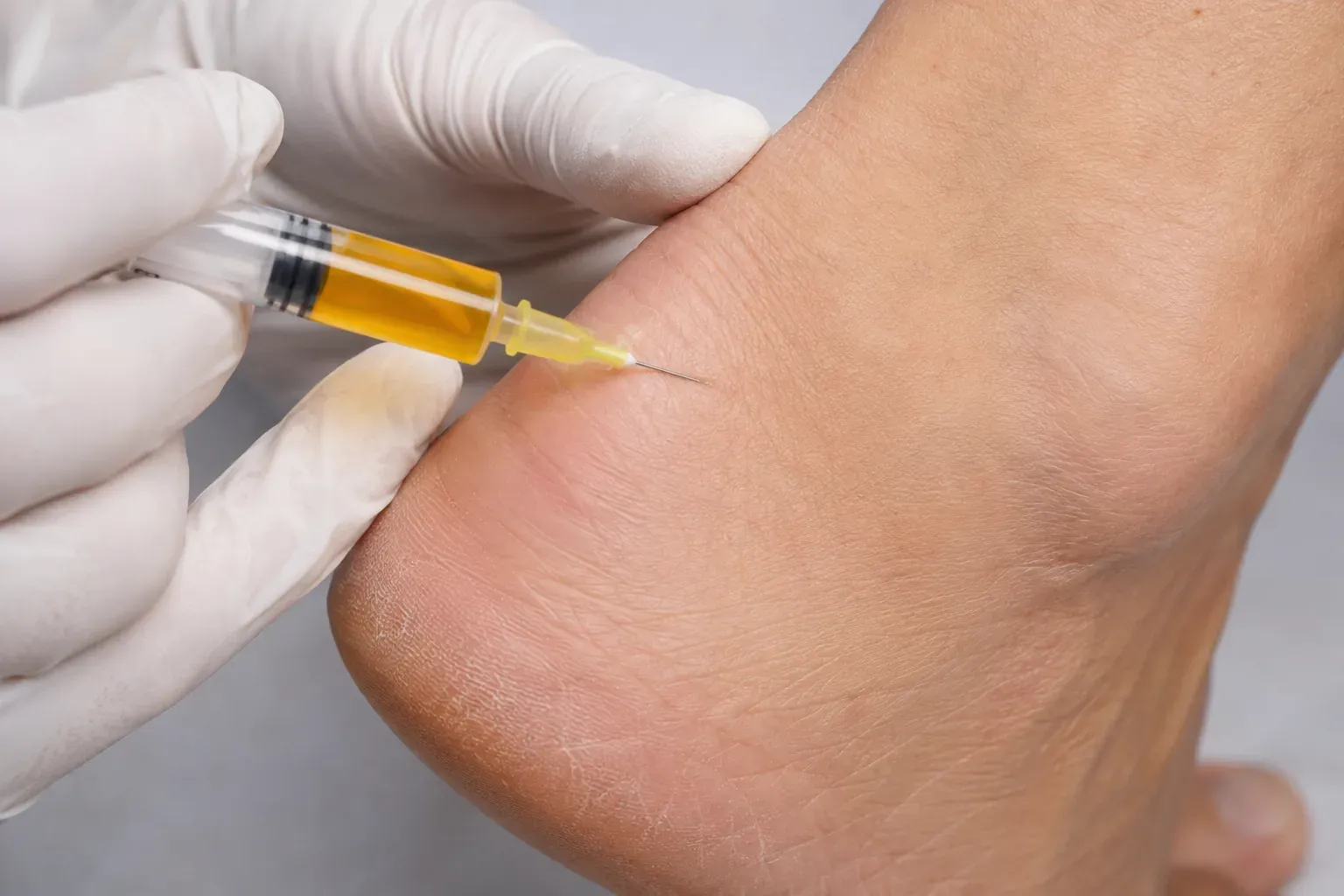
PRP vs. Cortisone for Foot Pain: Choosing the Right Injection
One suppresses your biology; the other concentrates it. Choosing correctly depends on which question your foot is asking.
Read the article →For the heel or tendon pain that has outlasted rest, stretching, and good shoes, shockwave therapy is the evidence-backed next move: focused acoustic energy that reawakens healing in tissue that gave up trying, with no needles, no medication, and no downtime.
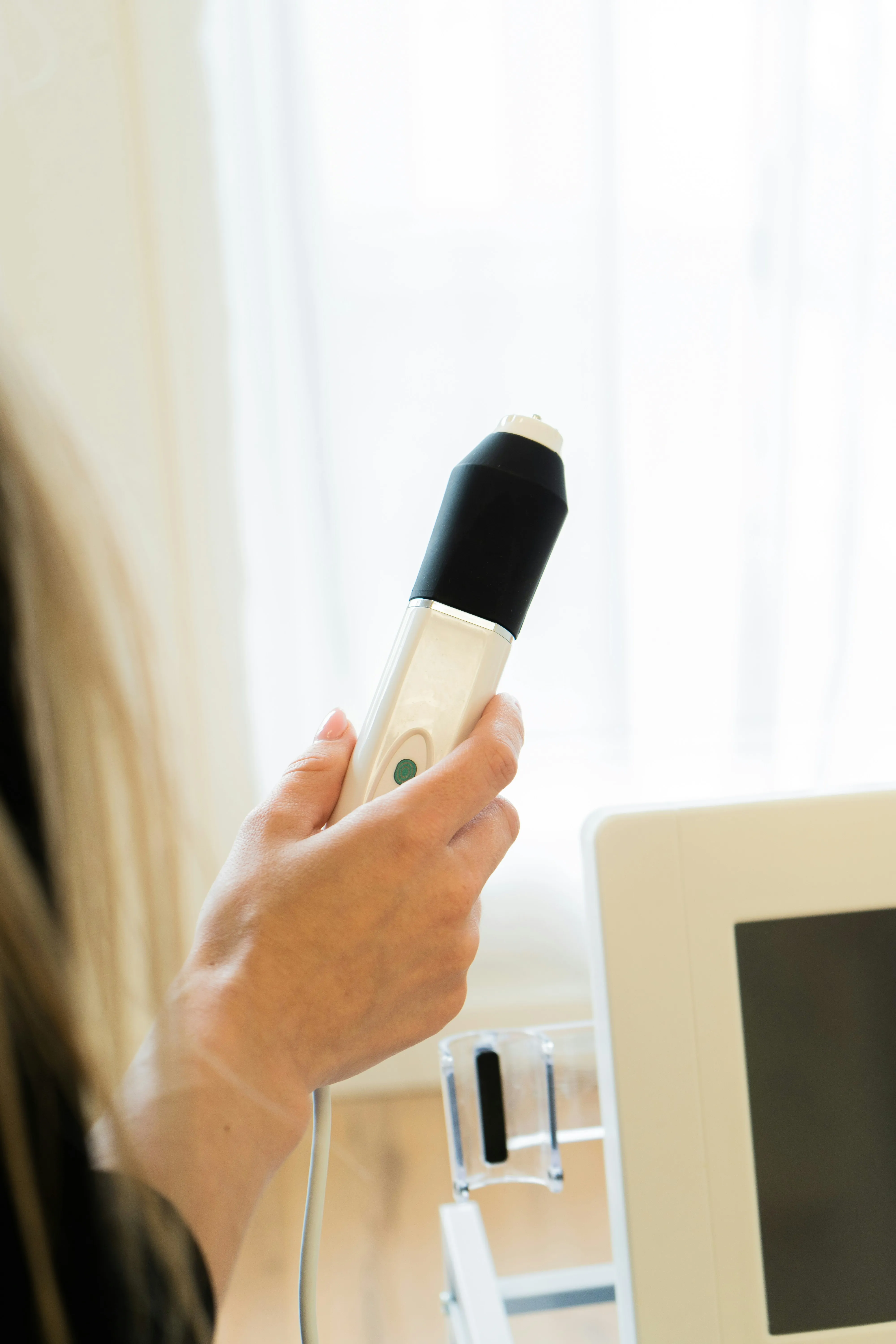
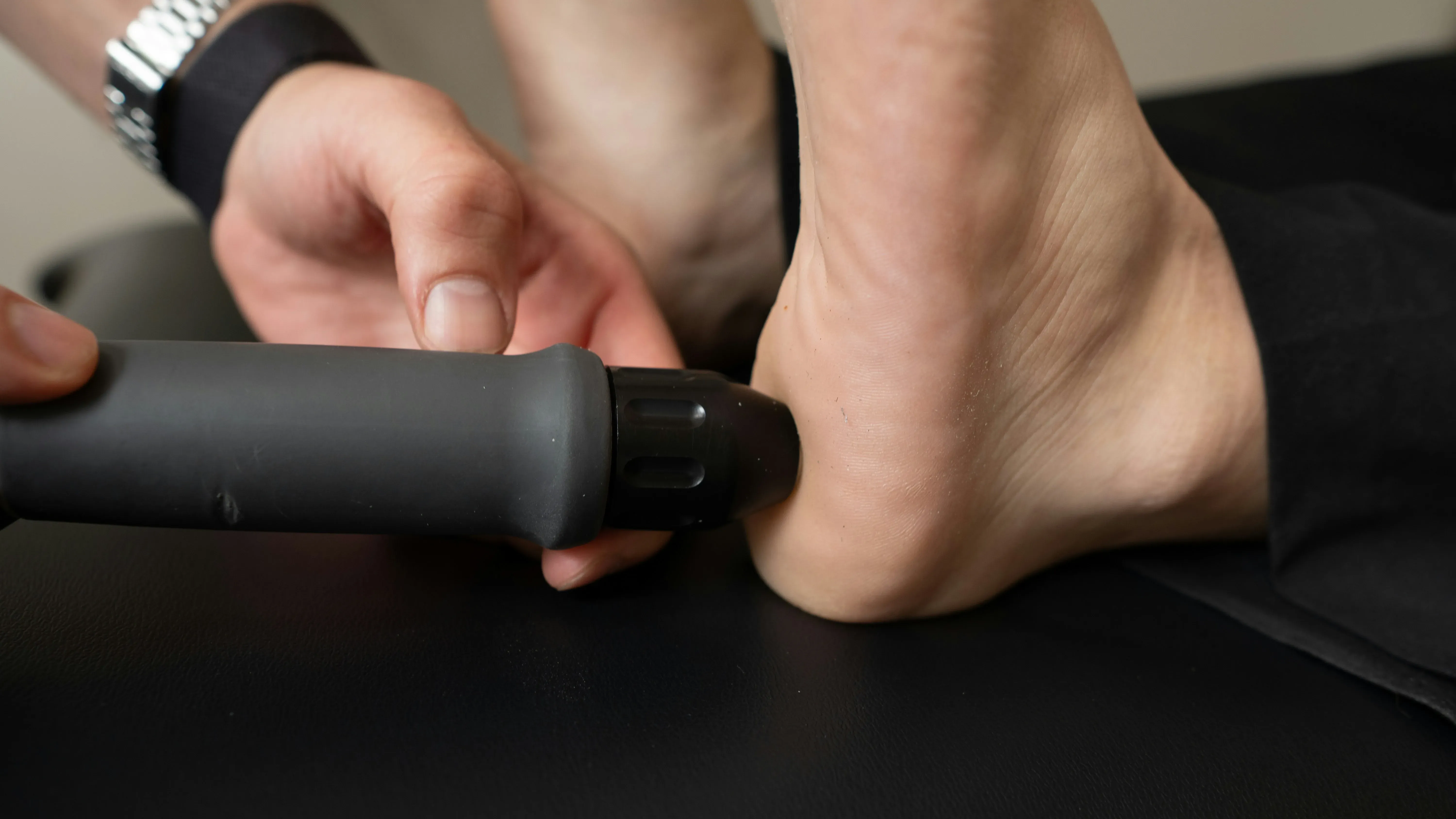
Chronic tendon and fascia problems aren't inflamed so much as stalled: degenerated tissue with poor blood supply that stopped remodeling. EPAT (extracorporeal pulse activation technology) delivers acoustic pressure waves into that exact tissue, creating controlled microstimulation that restarts the biology: new blood vessel growth, growth-factor release, and renewed collagen remodeling. In effect, it converts a stalled chronic injury back into an acute one your body finishes healing, this time correctly.
The sweet spot: pain persisting 3+ months despite genuine conservative care. It's not first-line for week-old pain (simple measures usually win there) and it's avoided over open wounds, in pregnancy, with certain blood thinners, and near active infection or tumor. Ideal candidates want to avoid injections and downtime, which is most people.
Exam and often ultrasound verify the diagnosis and map exactly where the degenerated tissue lives, because precision drives results.
Gel is applied and the applicator delivers pulses for about 5 to 10 minutes; it's intense pressure-tapping, uncomfortable but tolerable, with no anesthesia needed. A typical course is 3 sessions a week apart.
No downtime whatsoever; you drive yourself home and keep your day. We pair the course with the stretching and load program that locks in results.
There's no recovery period, which is the point: normal activity continues throughout, usually minus the highest-impact extremes for a few days after each session. Expect soreness for a day or two post-treatment (the biology restarting), with improvement typically building over 6 to 12 weeks as remodeling proceeds; this is a healing response, not a painkiller, so the timeline is biological.
Side effects are minor and short-lived: temporary soreness, redness, occasionally small bruises. The honest limits: published success rates for chronic plantar fasciitis and Achilles tendinopathy run strong but not universal (most studies land in the 60 to 80 percent range), and insurance often treats it as elective, so we quote the cash price upfront. It doesn't fix mechanics, which is why it comes bundled with the program that does.
It's genuinely uncomfortable, like a rapid deep tapping on a sore spot, and entirely tolerable for the 5 to 10 minutes it lasts; intensity is adjusted to you, and no numbing is needed. Most patients call it a fair trade within the first session.
The standard course is 3 sessions, one week apart. Some feel change after the second; for most, improvement builds over the 6 to 12 weeks after the course as tissue actually remodels. Judging it the morning after session one is judging a seed for not being a tree.
Different philosophies: cortisone suppresses inflammation fast but doesn't heal degenerated tissue and carries tissue-weakening risk with repetition (and is off the table near the Achilles). Shockwave stimulates repair, slower but aimed at the actual problem. For chronic fasciitis and tendinopathy, we usually reach for shockwave first.
Usually not; most plans classify it as elective, so it's typically self-pay. We tell you the exact cost before you commit, and the office can check your specific plan.
One suppresses your biology; the other concentrates it. Choosing correctly depends on which question your foot is asking.
Read the article →The standard answer is three, a week apart. The interesting part is why, and what determines whether you need more.
Read the article →For heel pain that outlasted rest, stretching, and good shoes, shockwave is the evidence-backed next move. Here's the honest picture.
Read the article →One exam at our Sugar Land office answers it. Call (281) 494-0572 or book online.