Laser for Toenail Fungus: Reading Past the Marketing
Laser is a real tool for fungal nails, wrapped in more hype than any treatment deserves. Here's the signal without the noise.
Read the article →X-rays see bone; most foot pain lives in everything else. In-office ultrasound images the soft tissue in real time, during your visit, while you point at what hurts, which changes both the speed and precision of diagnosis.
Ultrasound bounces harmless high-frequency sound off tissue and reads the echoes into live images of tendons, fascia, ligaments, nerves, and fluid. Its podiatric superpowers: measuring plantar fascia thickness (a fasciitis fingerprint), watching tendons glide and catching tears static images miss, confirming neuromas, finding hidden fluid collections, and, in its second job, guiding needles: injections delivered under live imaging land exactly where intended, every time.
Anyone whose diagnosis needs soft-tissue eyes: unclear heel pain, suspected tendon damage, forefoot burning that might be neuroma, or a lump needing identification. It's also the difference-maker for injections into small or deep targets. Limits are physical: sound doesn't cross bone, so joint interiors and marrow belong to X-ray and MRI.
Gel on skin, probe on foot, images on screen in real time; it adds minutes to a visit, not a separate appointment across town.
You watch alongside: the thickened fascia, the tendon defect, the neuroma bulge, and both feet can be compared instantly, which makes findings concrete.
Results feed straight into the plan, and if a guided injection is warranted, it can often happen immediately, no second visit required.
None whatsoever: no radiation, no contrast, no discomfort beyond cold gel. It's the same technology used on pregnancies, aimed at feet. Results arrive the moment the probe touches skin.
Diagnostic risk is essentially zero. Interpretation limits deserve honesty: ultrasound is operator-dependent, some deep or bone-adjacent problems need MRI's broader view, and we refer for one when the picture demands it. Ultrasound complements rather than replaces X-ray, which is why the office runs both.
Ultrasound is immediate, in-office, dynamic (it watches tissue move, which MRI can't), and far less costly, resolving most soft-tissue questions same-day. MRI wins for bone marrow, deep joint surfaces, and surgical mapping. Sensible medicine uses ultrasound first and MRI when specifically indicated, not reflexively.
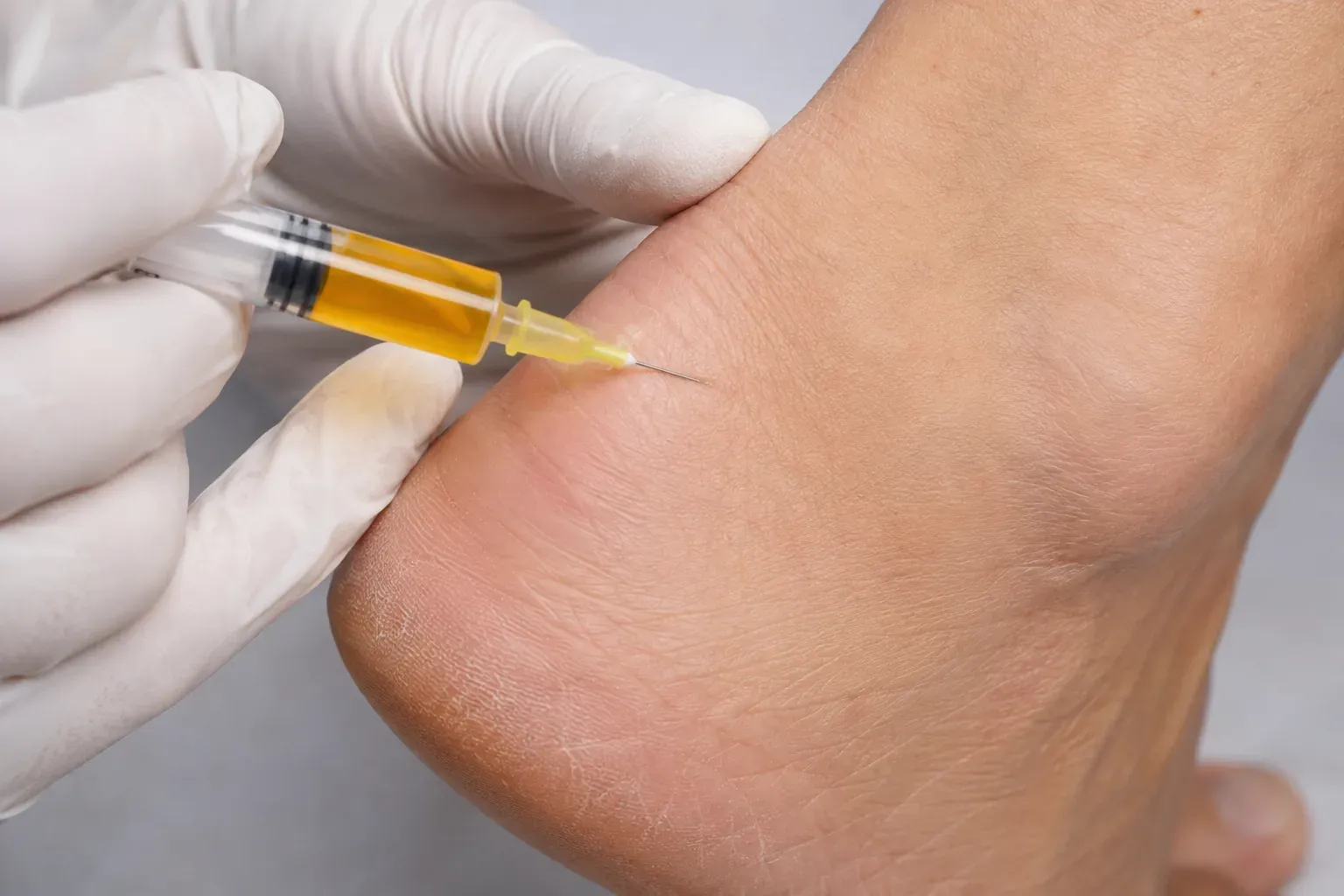
Because foot targets are small and neighbors matter: a neuroma sits millimeters from structures you'd rather not inject, and blind injections miss more often than anyone advertises. Guidance turns placement from probable to watched-it-happen, improving both results and the diagnostic meaning of the response.
Diagnostic ultrasound is a standard covered service under most plans when medically indicated, unlike some newer therapies. The office verifies your specific benefits as always.
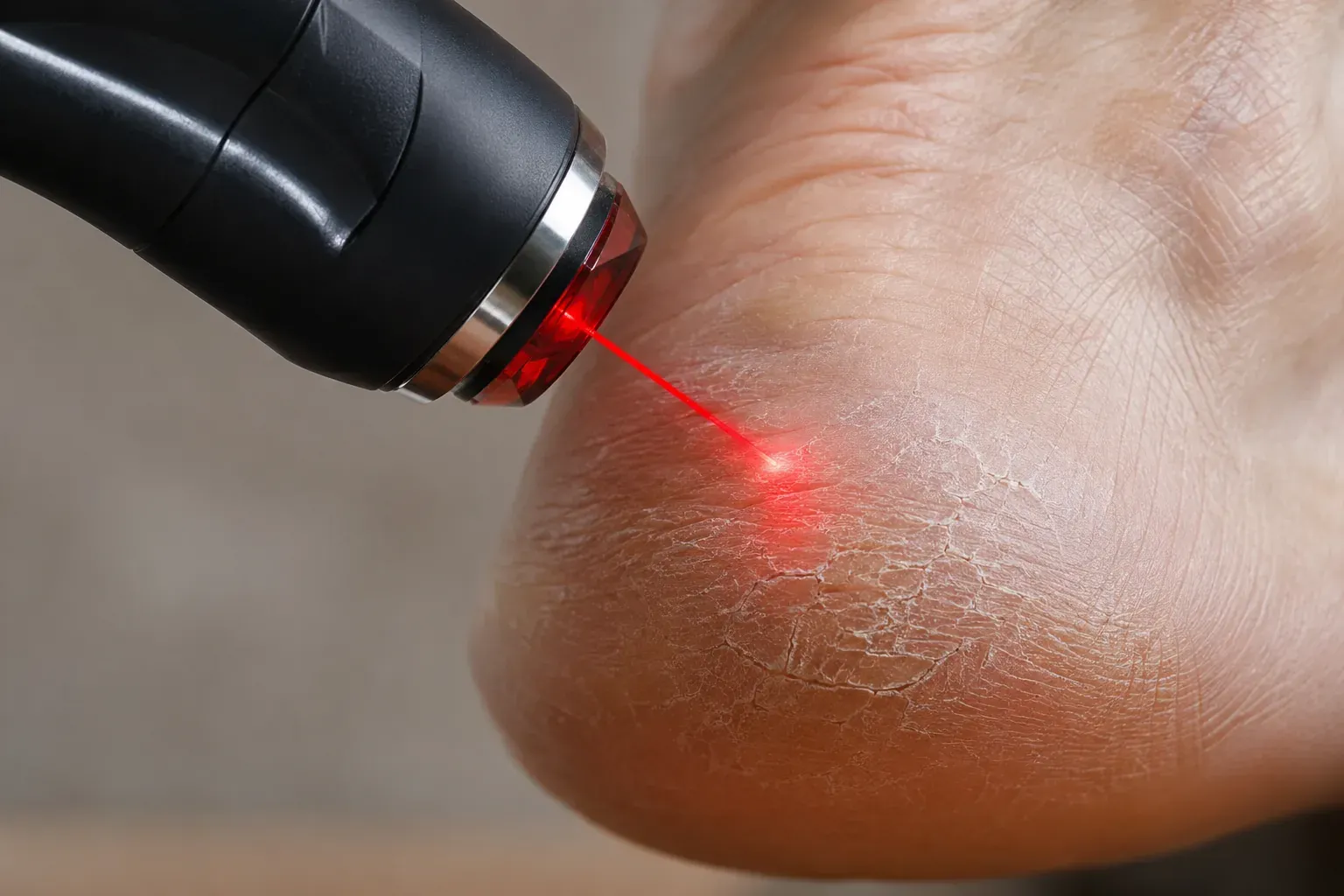
Laser is a real tool for fungal nails, wrapped in more hype than any treatment deserves. Here's the signal without the noise.
Read the article →Warts persist by hiding from your immune system. Swift's trick is blowing their cover.
Read the article →One suppresses your biology; the other concentrates it. Choosing correctly depends on which question your foot is asking.
Read the article →One exam at our Sugar Land office answers it. Call (281) 494-0572 or book online.