Osteoarthritis vs. Rheumatoid Arthritis in Feet: Different Diseases, Different Plans
One is mechanical wear; the other is an immune system attacking its own joints. Feet often reveal which is which first.
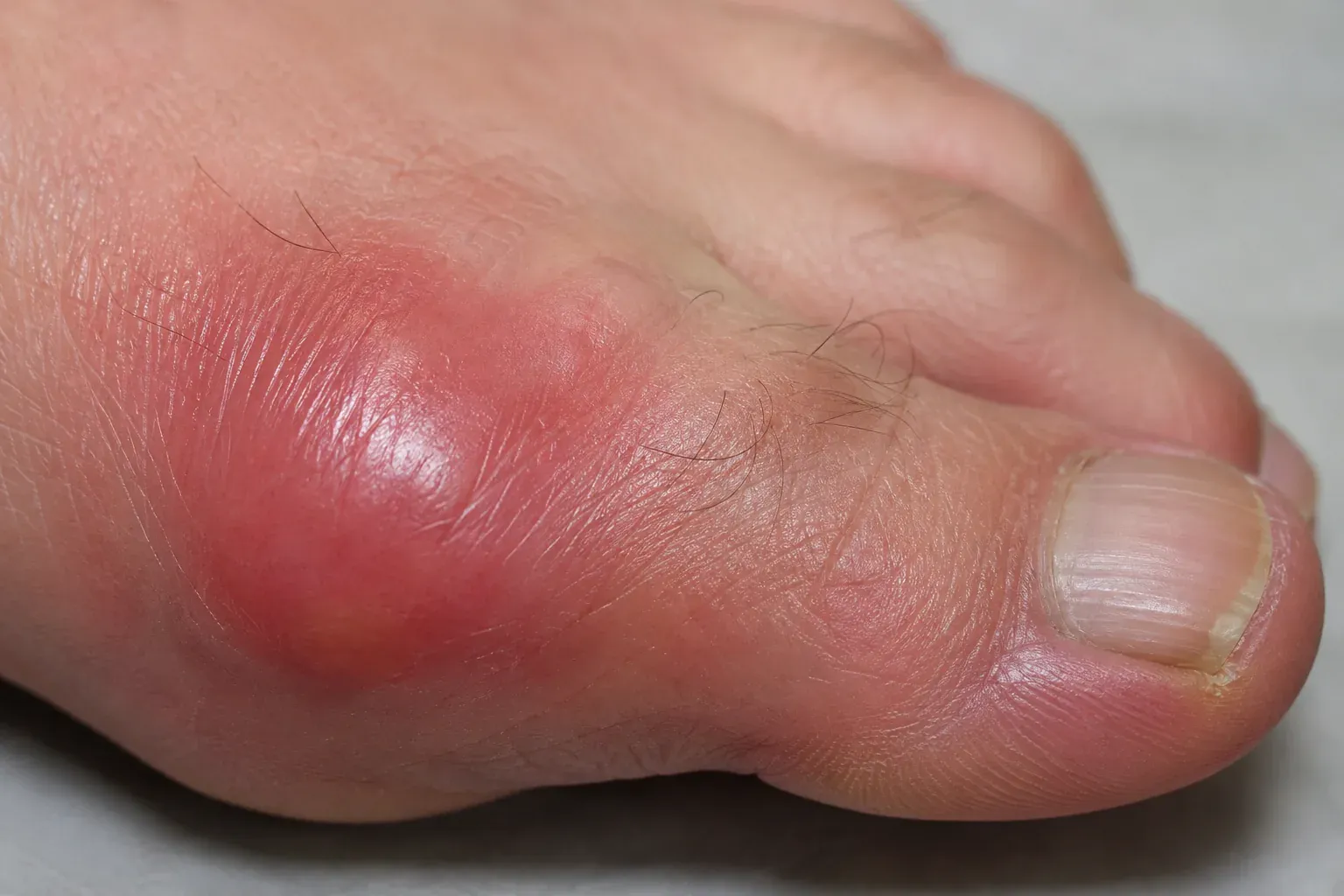
Read the article →Gout announces itself like nothing else in podiatry: a big toe joint that goes from fine at bedtime to unbearable by 3 a.m., red, hot, swollen, and too tender for a bedsheet. The attack is dramatic, the relief can be fast, and the disease behind it is very manageable.
Gout is crystal arthritis: when uric acid levels run high, needle-shaped urate crystals precipitate in cool joints, and the big toe joint (the body's coolest, hardest-working joint) is target number one. An attack is your immune system discovering those crystals and responding with full inflammatory fury. Between attacks the crystals remain unless uric acid is lowered, which is why untreated gout returns, spreads to other joints, and eventually builds destructive deposits called tophi.
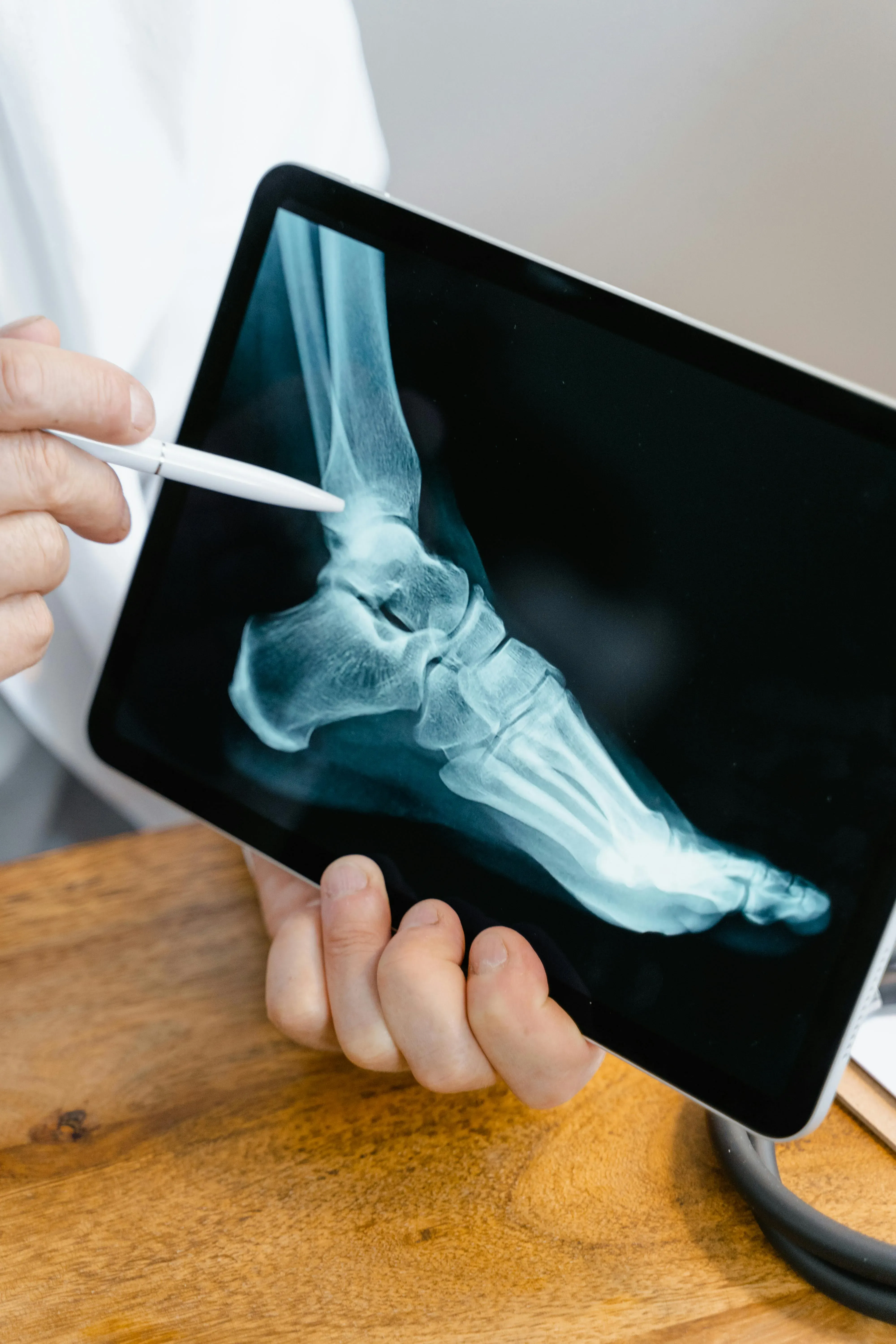
The classic picture is strongly suggestive, but Dr. Patel confirms rather than assumes: examining the joint, sometimes sampling fluid to see crystals directly (the definitive test, which also rules out infection), and reviewing uric acid history. X-rays check for the erosions of long-standing gout.
During your first attack, since it needs distinguishing from infection and other arthritis, and whenever attacks recur, because recurrence means it's time to treat the cause, not just the flares. Same-day relief is realistic; call early in the attack.
Call (281) 494-0572 promptly for: a hot swollen joint with fever or chills, or after a skin wound, which could be septic arthritis: a true emergency needing same-day care. Urgent foot problems are worked into the schedule faster.
Treatment starts with the simplest option likely to work and escalates only when needed.
Anti-inflammatories, colchicine, or a precisely placed cortisone injection, which can quiet a raging joint within a day.
Trigger identification, hydration, and dietary guidance that's realistic rather than joyless.
For recurrent gout, coordination with your physician on daily urate-lowering medication, the actual cure-path that dissolves crystals over time.
Managing damage in long-standing gout: footwear, orthotics, and treatment of the arthritis it leaves behind.
Crystals form more readily at lower temperatures, and the big toe is the body's coldest joint, farthest from the heart. It's also stressed with every step, making it the perfect crystallization site. Ankles, midfeet, and knees are next in line.
Diet influences attacks but usually accounts for a minority of uric acid; genetics and kidney clearance set the baseline. Diet changes help, and for recurrent gout, daily medication is what actually dissolves the crystals. The combination works.
Treated within the first day, most attacks settle dramatically within 24 to 48 hours; a joint injection can work even faster. The longer an attack runs untreated, the slower it releases, so call early: (281) 494-0572.
One is mechanical wear; the other is an immune system attacking its own joints. Feet often reveal which is which first.
Read the article →Fine at bedtime, on fire by 3 a.m.: the classic gout attack has good reasons for its timing and its target.
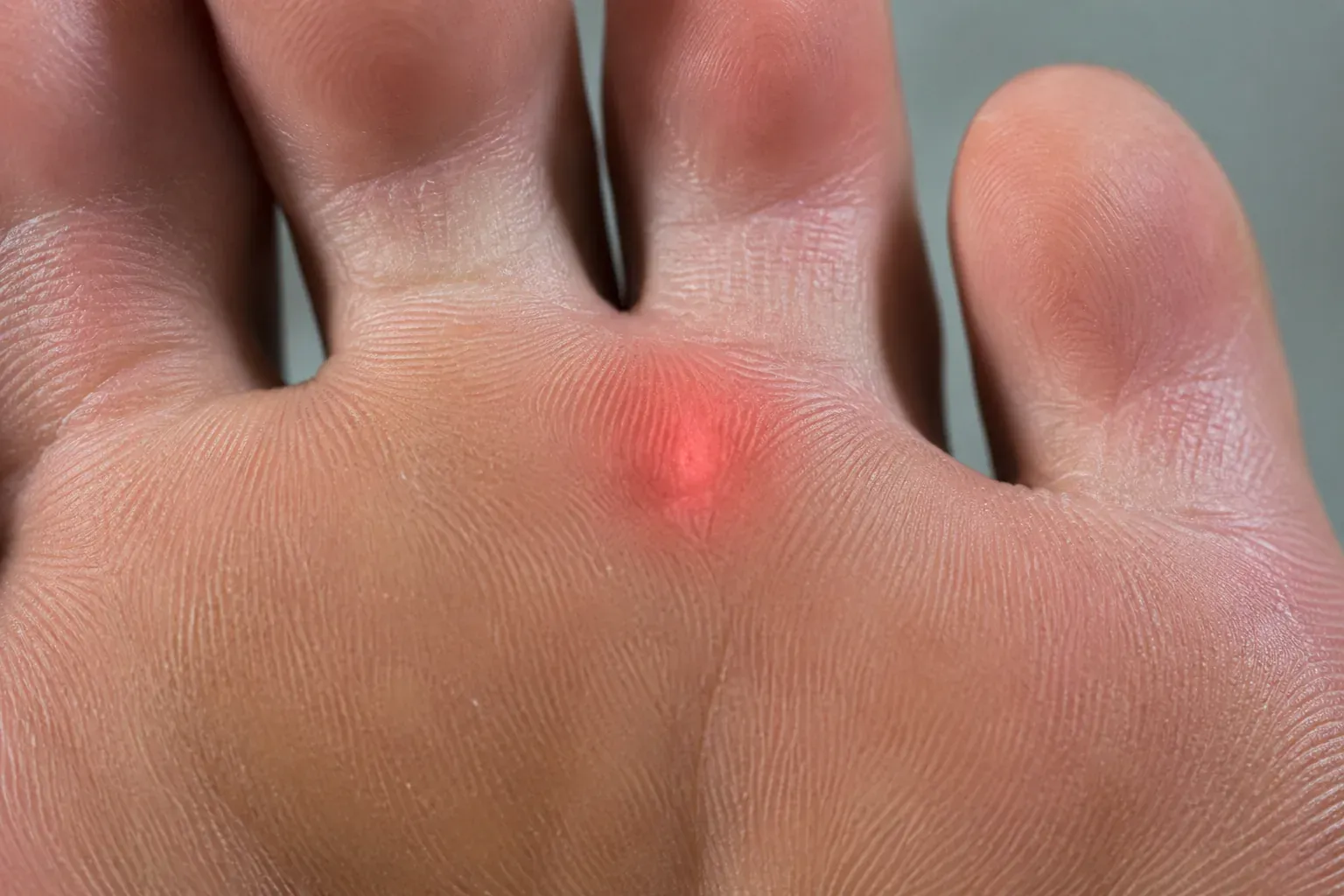
Read the article →Ball-of-foot pain has a crowded suspect list. Nerve or bone-and-joint is the first fork, and the treatments diverge from there.
Read the article →One visit at our Sugar Land office gets you a diagnosis and a plan. Call (281) 494-0572 or book online.