Toenail Fungus Treatments Compared: What Actually Clears Nails
Four real options, very different success rates. An honest comparison before you spend another year on the wrong one.
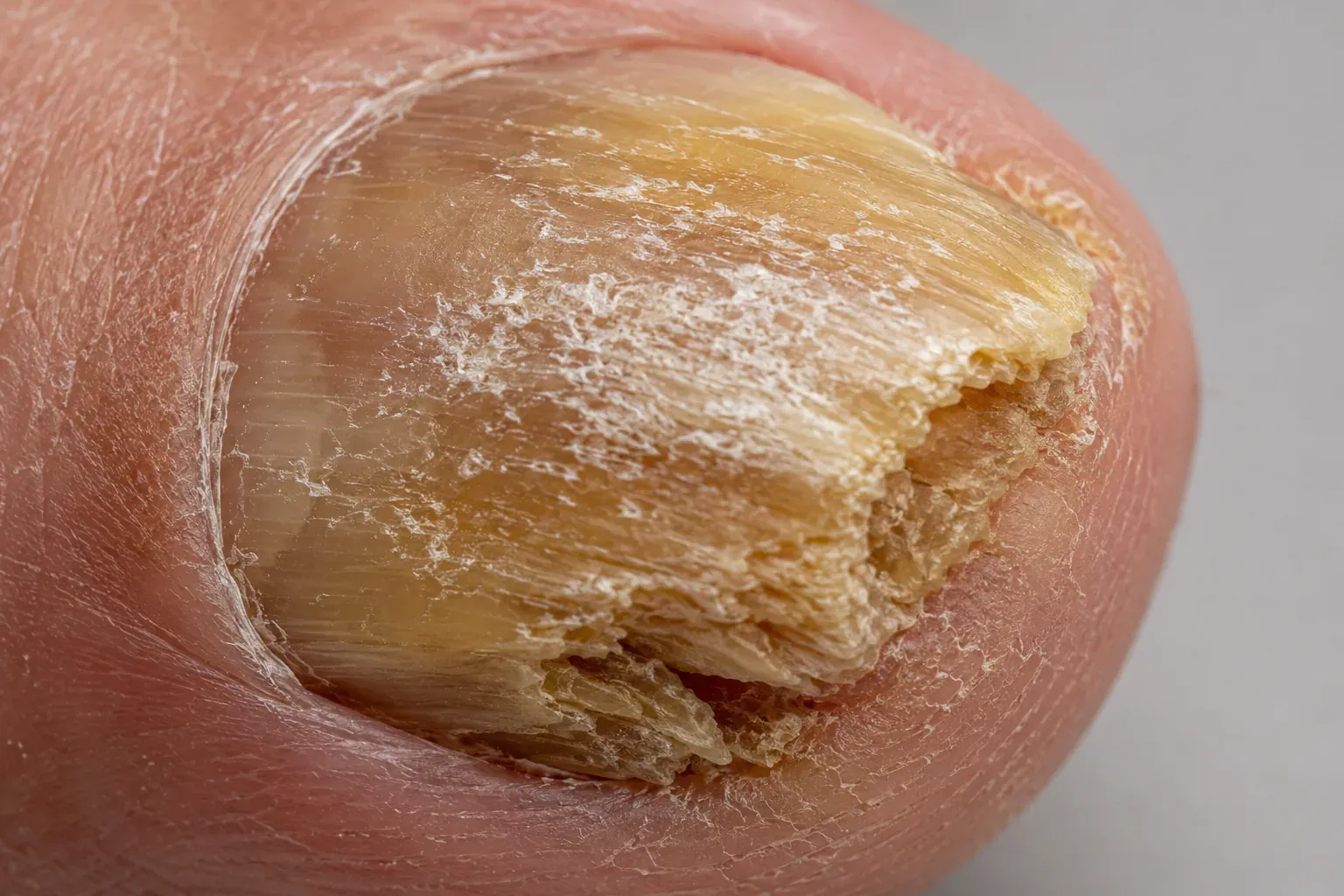
Read the article →Thick, yellowed, crumbling nails aren't a hygiene problem; they're an infection living where creams struggle to reach, under and inside the nail plate. That's why the drugstore keeps disappointing you, and why proper treatment starts with confirming what you're actually treating.
Onychomycosis is a fungal infection of the nail bed and plate, usually by the same organisms that cause athlete's foot. The fungus digests keratin, thickening and discoloring the nail from within. It's slow, stubborn, and protected by the nail plate above it, so effective treatment either goes through the body (oral medication), through a debrided nail (topicals that can penetrate), or attacks the fungus physically (laser). Not every ugly nail is fungal, though, which is why testing matters.
Dr. Patel confirms fungus before committing you to months of treatment, since psoriasis, trauma, and age-related changes mimic it and don't respond to antifungals. A painless nail sample settles it. Then treatment is matched to how much nail is involved, your health, and your preferences.
Come in when the appearance bothers you, trimming becomes a chore, or the nail starts causing pressure pain, and sooner rather than later: early infections involving part of one nail clear far more reliably than nails that have been fully infected for years. Diabetics should treat fungal nails proactively; thick nails cause skin breaks.
Call (281) 494-0572 promptly for: a fungal nail with surrounding redness, warmth, or drainage, especially with diabetes. Urgent foot problems are worked into the schedule faster.
Treatment starts with the simplest option likely to work and escalates only when needed.
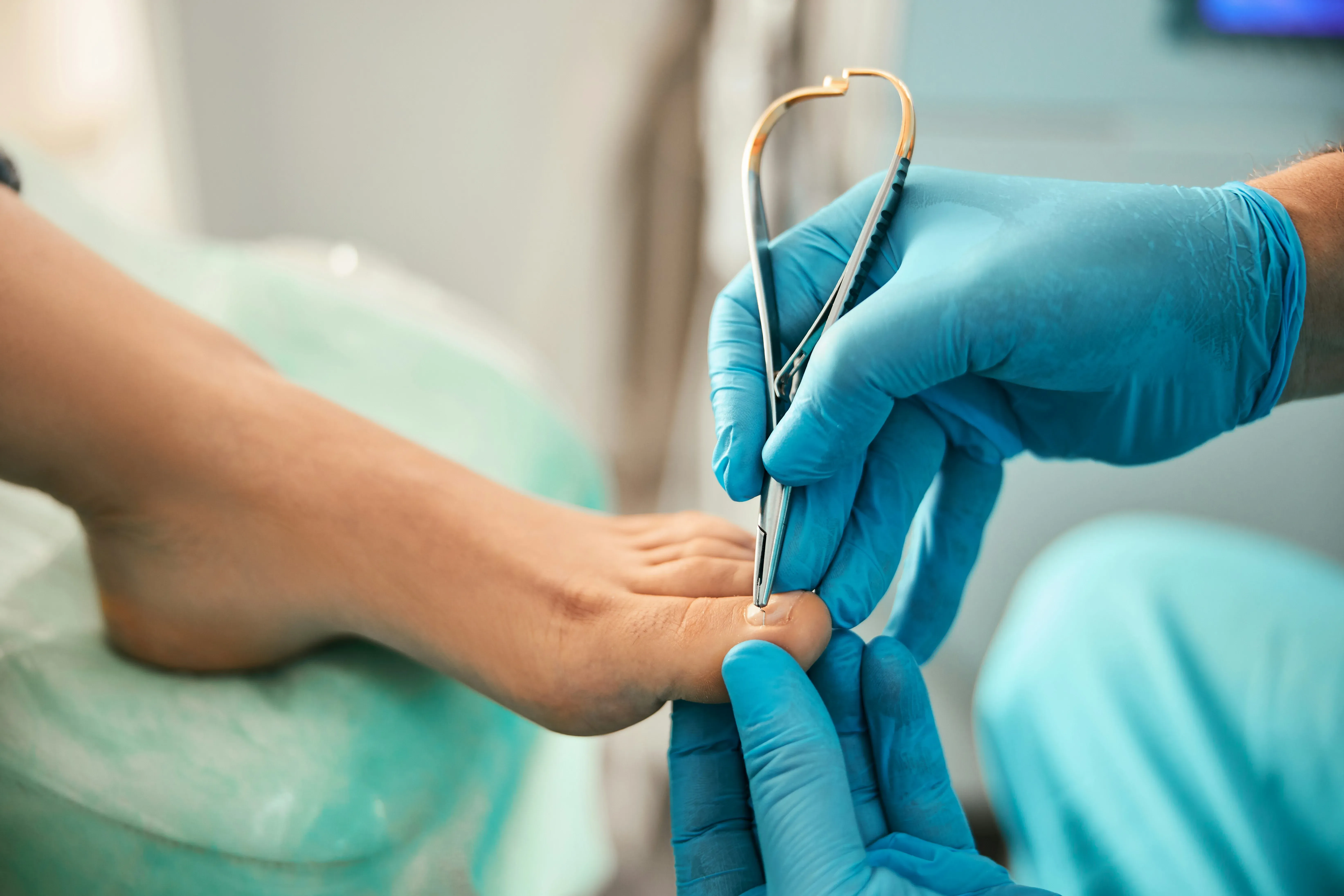
Thinning and shaping thick nails immediately improves comfort and appearance, and lets other treatments actually reach the fungus.
Modern medicated lacquers work for early, limited infections when paired with debridement and shoe hygiene. Expect months, not weeks.
The most effective option for established infections; a typical 12-week course with simple safety monitoring. We'll discuss whether it fits your health picture.
Laser targets fungus without medication for those who prefer or need to avoid orals. Keryflex restores a natural-looking nail cosmetically while the real one regrows.
Over-the-counter creams can't penetrate the nail plate to reach the infection underneath. They're fine for athlete's foot on skin; for nails, you need debridement plus penetrating prescription treatment, oral medication, or laser.
Nails grow slowly: a big toenail replaces itself in 9 to 12 months. Treatment kills the fungus in weeks to months, but the clear nail has to physically grow out. Photos along the way show the clear zone advancing.
It can; reinfection from shoes and showers is the usual route. Shoe sanitizing, moisture control, and treating athlete's foot promptly cut the risk substantially, and we'll set you up with the routine.
It's a real option with reasonable evidence, particularly for people who can't take oral antifungals. Honest framing: orals remain the most effective single treatment; laser trades some efficacy for zero systemic medication.
Four real options, very different success rates. An honest comparison before you spend another year on the wrong one.
Read the article →Most ingrown toenails start with a trimming decision. The correct technique takes no extra time; it just takes knowing it.
Read the article →Every ingrown toenail is angry; not every one is infected. Here's the line, and what crossing it means.
Read the article →One visit at our Sugar Land office gets you a diagnosis and a plan. Call (281) 494-0572 or book online.