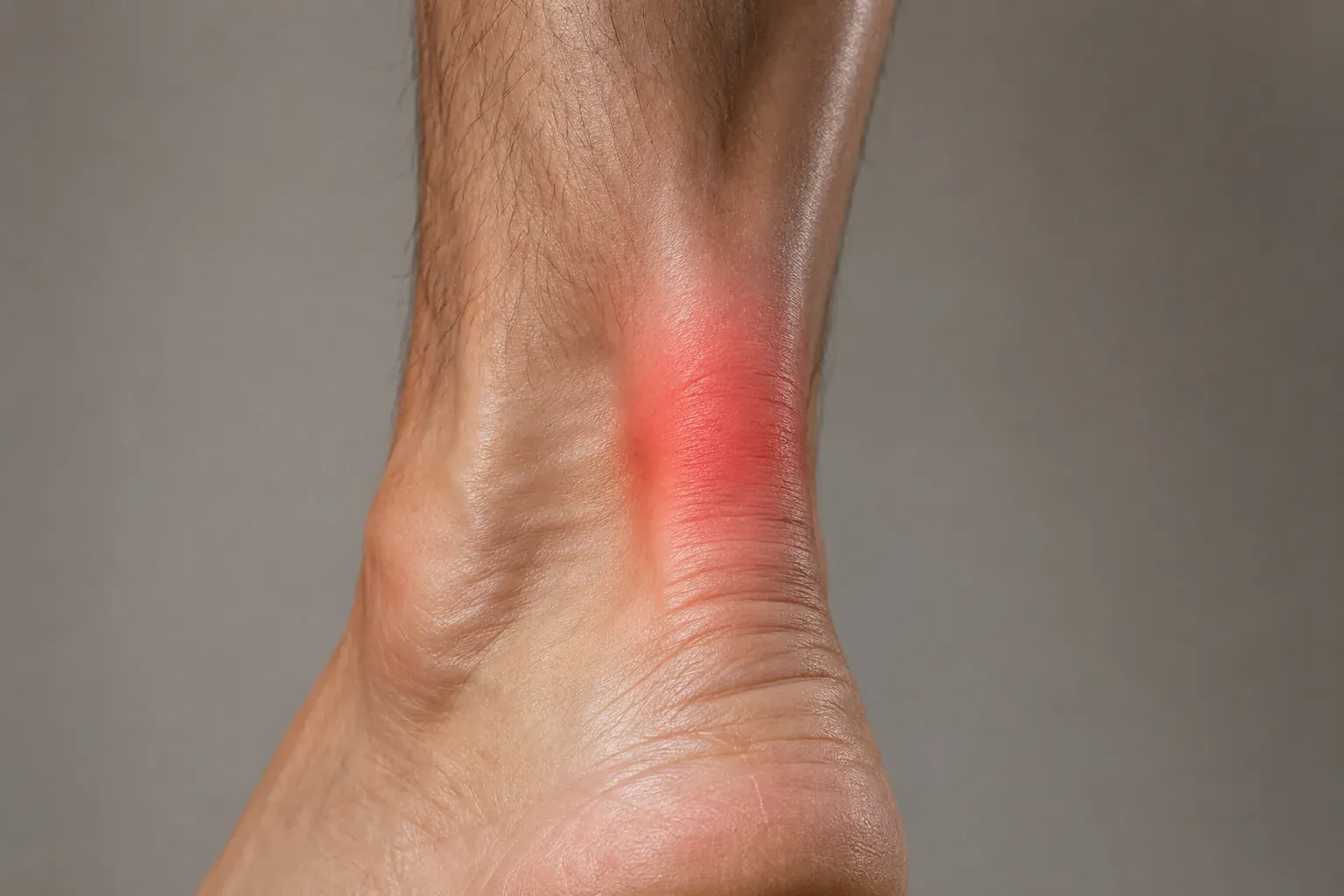
Achilles Tendinitis Recovery Time: Honest Expectations
The Achilles heals on tendon time, not your calendar. Knowing the real numbers prevents both premature quitting and reinjury.
Read the article →Flat feet themselves aren't a disease; plenty of people live happily on low arches. The problems worth treating are the painful ones: arches that ache, tire fast, roll ankles, or are visibly falling in adulthood. That last one matters most.
A flat foot is one whose arch collapses under load, rolling the ankle inward and changing how force travels up the leg. Some feet are flat from childhood (flexible flatfoot, usually benign). More concerning is the arch that falls in adulthood, typically from a failing posterior tibial tendon, the arch's main support cable. Adult-acquired flatfoot is progressive and much easier to treat early than late.
Dr. Patel examines your arch seated and standing, tests the posterior tibial tendon directly (the single-leg heel raise tells us a lot), watches your gait, and checks flexibility. X-rays measure alignment when structural change is suspected, distinguishing flexible from rigid flatfoot, which determines the treatment path.
Painless flat feet in a child usually just need monitoring. See a podiatrist when flat feet hurt, tire quickly, cause ankle or knee pain, or when an adult arch is visibly lowering, since adult-acquired flatfoot caught early can often be managed with support alone, while late-stage cases may need surgery.
Call (281) 494-0572 promptly for: a sudden arch collapse or new inability to raise onto tiptoes on one foot; inner-ankle pain with swelling after activity. Urgent foot problems are worked into the schedule faster.
Treatment starts with the simplest option likely to work and escalates only when needed.
The cornerstone for symptomatic flat feet: prescription support that restores alignment and takes the strain off overworked tendons.
Targeted work for the posterior tibial tendon and calf keeps the arch's support system doing its job.
An ankle-foot orthosis supports arches that need more than an insert while healing or long term.
For rigid or advanced adult flatfoot that support can't manage; catching it early usually avoids this entirely.
Usually not. Most kids' arches develop into their teens, and flexible, painless flat feet generally need nothing. Bring them in if there's pain, tripping, rapid shoe wear, or activity avoidance; those aren't normal.
Exercises strengthen the muscles that support the arch and reduce symptoms, but they don't rebuild a structurally flat foot. For most people, strengthening plus proper support delivers comfortable, active feet, which is the actual goal.
They can contribute. When the arch collapses, the leg rotates inward with every step, which some knees, hips, and backs pay for. Correcting foot alignment sometimes relieves pain well above the ankle.
The Achilles heals on tendon time, not your calendar. Knowing the real numbers prevents both premature quitting and reinjury.
Read the article →When heel pain outlasts months of trying, one of four things is usually going on. None of them is 'just live with it.'
Read the article →Plenty of pain-free feet have spurs, and plenty of painful heels don't. Here's how to tell what's actually going on.
Read the article →One visit at our Sugar Land office gets you a diagnosis and a plan. Call (281) 494-0572 or book online.