Toenail Fungus Treatments Compared: What Actually Clears Nails
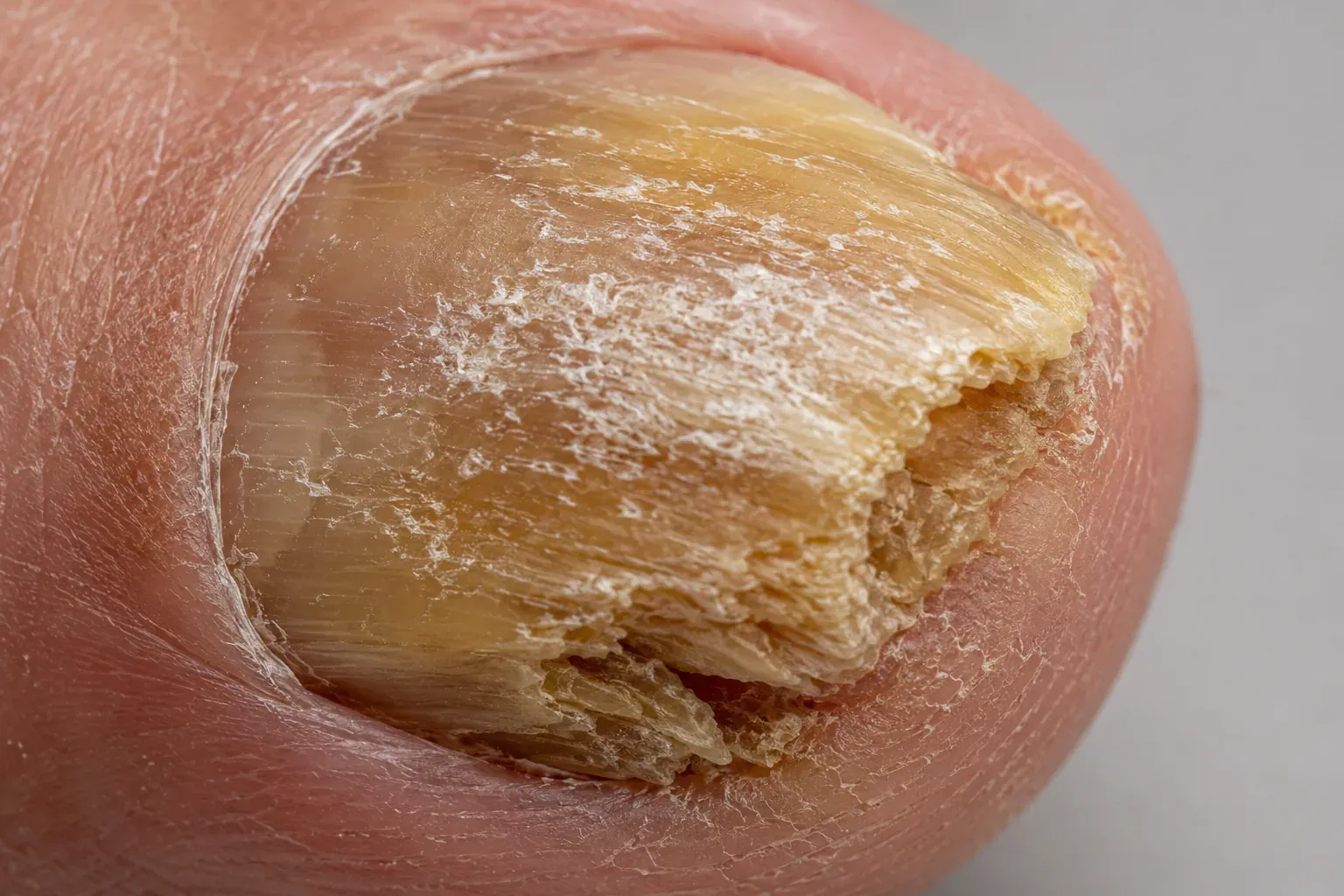
Four real options, very different success rates. An honest comparison before you spend another year on the wrong one.
Read the article →A toe that curls instead of lying flat starts as an annoyance, becomes a corn factory, and can end as a rigid, painful joint. The window that matters is while the toe is still flexible, because flexible toes have easy fixes.
A hammertoe is a lesser toe stuck in a bent position at its middle joint, caused by an imbalance between the tendons on top and bottom of the toe. Early on the toe still straightens when pushed (flexible); over time the joint contracts and fixes in place (rigid). The bent knuckle rubs shoes, building painful corns, and the toe tip presses into the ground, sometimes forming calluses underneath.
Dr. Patel checks each toe's flexibility, maps the corns and calluses (they show exactly where forces go wrong), and traces the cause, whether footwear, mechanics, or a neighboring bunion. X-rays stage the joint when correction is being considered.
See a podiatrist while the toe still flexes; that's when padding, exercises, and footwear can do the most, and when small in-office fixes are possible. Rigid, painful hammertoes are still very treatable, but the options shift toward correction.
Call (281) 494-0572 promptly for: an open sore or bleeding corn on a hammertoe, especially with diabetes; a suddenly red, hot, swollen toe. Urgent foot problems are worked into the schedule faster.
Treatment starts with the simplest option likely to work and escalates only when needed.
A deep toe box stops the friction immediately; corn pads and crest pads relieve pressure points while we address the cause.
Painless in-office thinning of built-up skin, with diabetic-safe technique, plus prevention so they stop returning.
For flexible hammertoes, keeping the joint mobile and rebalancing the tendons slows or stops progression.
For rigid or persistently painful toes, a brief procedure straightens the joint permanently. Recovery is measured in weeks, and it ends the corn cycle for good.
No; the imbalance that bent the toe doesn't self-correct. Flexible hammertoes can be kept comfortable and slowed for years, but only correction actually straightens a toe that has stiffened.
Because the corn is a symptom: skin thickening under repeated pressure from the bent joint. Until the pressure changes, through padding, footwear, or straightening the toe, the corn regrows on schedule.
It's typically an outpatient procedure done through small incisions, walking the same day in a stiff-soled shoe. Most people are back in regular shoes in about 4 to 6 weeks, depending on the toe and technique.
Four real options, very different success rates. An honest comparison before you spend another year on the wrong one.
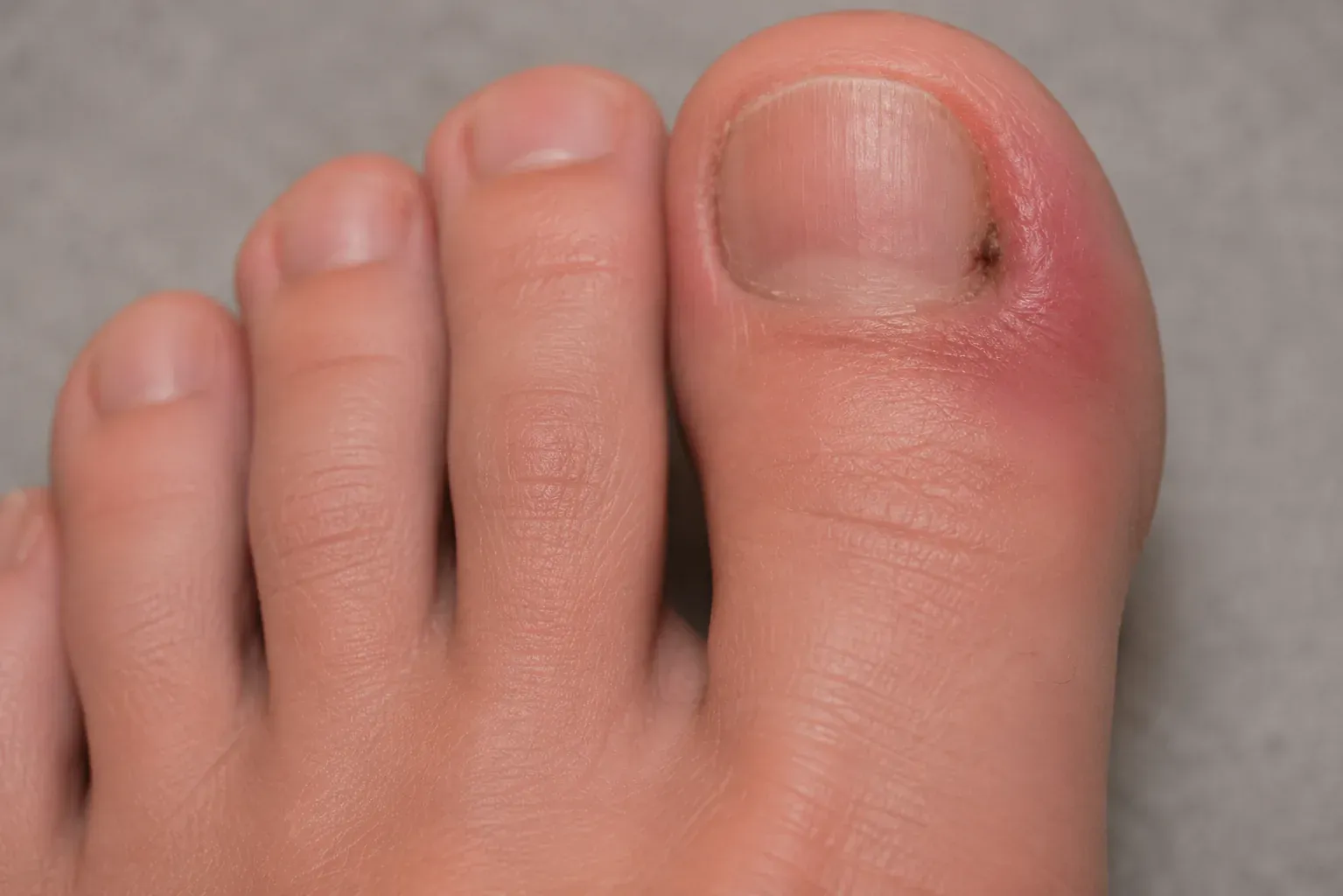
Read the article →Every ingrown toenail is angry; not every one is infected. Here's the line, and what crossing it means.
Read the article →Three lesions that look alike, get mistaken for each other constantly, and need completely different treatment.
Read the article →One visit at our Sugar Land office gets you a diagnosis and a plan. Call (281) 494-0572 or book online.