Early Signs of Neuropathy in Your Feet (Catch It Before It's Advanced)
Neuropathy rarely announces itself. It creeps in with signs most people explain away for years.
Read the article →Neuropathy plays a cruel trick: it can make feet burn and tingle relentlessly while simultaneously making them numb to real injury. Managing both sides of that trick, the discomfort you feel and the dangers you don't, is what neuropathy foot care is about.
Peripheral neuropathy is damage to the long nerves serving the feet, which fail in two directions at once: misfiring (burning, tingling, electric jolts, hypersensitivity) and under-reporting (numbness, lost position sense, silent injuries). Diabetes is the most common cause, but far from the only one. The feet pay the highest price because their nerves are the body's longest, and the podiatric mission is twofold: help calm symptoms, and protect feet that have lost their alarm system.
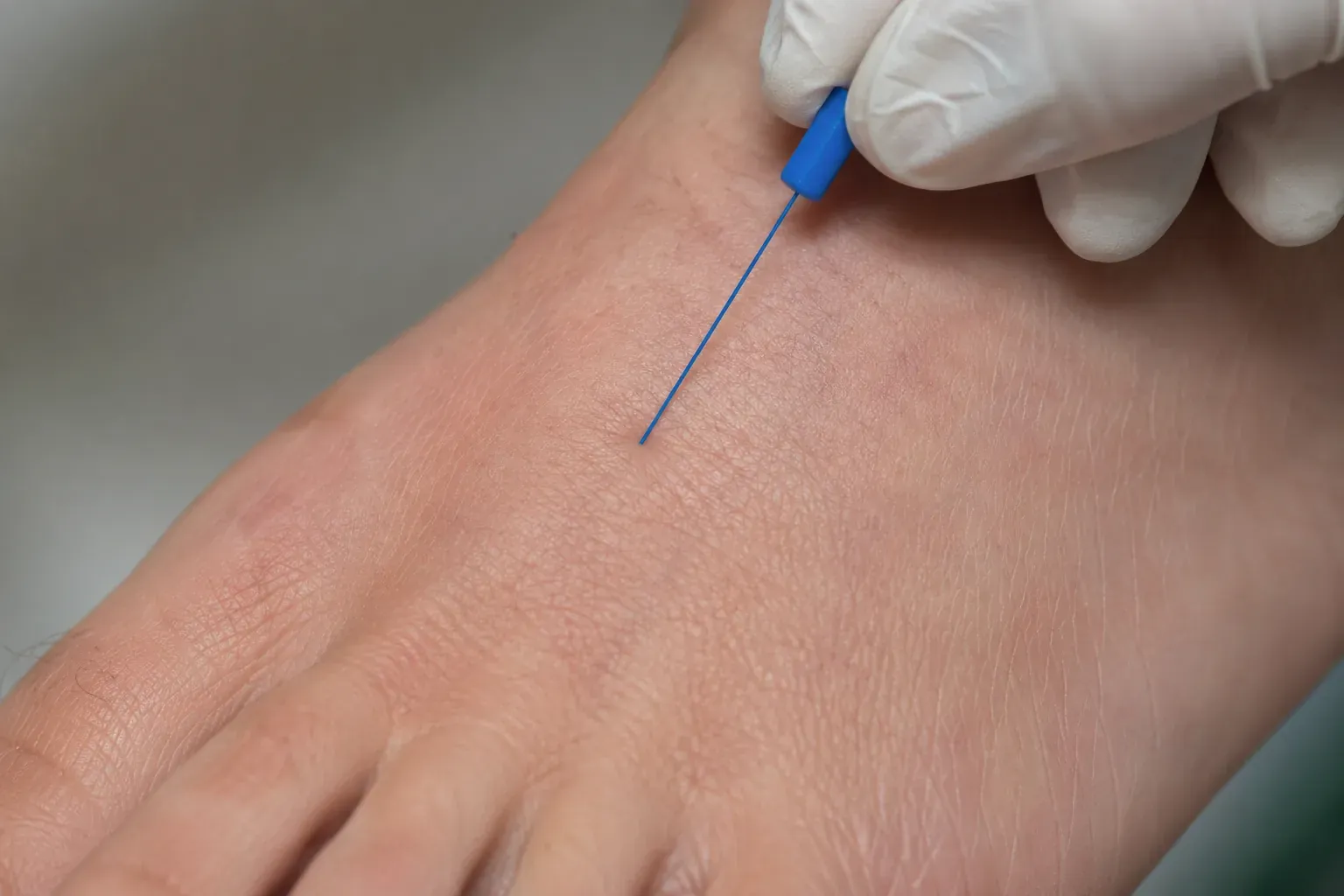
Sensation is mapped objectively with monofilament, vibration, and reflex testing to establish how much protective sensation remains, the number that sets your risk level. The exam also hunts contributing causes worth reversing and inspects for damage you may not have felt. Findings are documented for your physician, since neuropathy management is team medicine.
New numbness, burning, or tingling in both feet deserves evaluation, both to protect your feet and because the pattern sometimes uncovers a treatable cause like B12 deficiency. If you already carry the diagnosis, regular foot exams become your outsourced sensation.
Call (281) 494-0572 promptly for: a wound you can't feel; sudden foot weakness or drop; a red, hot, swollen foot without pain, which in neuropathy can signal serious problems like Charcot arthropathy. Urgent foot problems are worked into the schedule faster.
Treatment starts with the simplest option likely to work and escalates only when needed.
Risk-appropriate exam schedule, daily self-check routine, and footwear standards; the system that substitutes for lost sensation.
Coordination on nerve pain medications, plus practical measures for night burning and hypersensitivity.
When feet can't feel a slip of the clippers, routine care moves in-office and is typically covered.
Footwear and support strategies that compensate for lost position sense and cut fall risk.
Depends on the cause. B12-deficiency and some medication-induced neuropathies can improve once corrected; diabetic neuropathy generally can't be reversed, but its progression can be slowed dramatically with glucose control, and feet can be kept safe indefinitely with the right program.
Damaged nerves misfire more when competing signals quiet down; without daytime sensory traffic, the static comes through. Timing of medications, evening routines, and even breathable bedding can help; we'll walk through options.
Roughly a third of neuropathy has non-diabetic causes and a portion stays unexplained. It's worth a workup with your physician (B12, thyroid, kidney function among others) while we protect your feet the same way regardless of cause.
Neuropathy rarely announces itself. It creeps in with signs most people explain away for years.
Read the article →One is mechanical wear; the other is an immune system attacking its own joints. Feet often reveal which is which first.
Read the article →Ball-of-foot pain has a crowded suspect list. Nerve or bone-and-joint is the first fork, and the treatments diverge from there.
Read the article →One visit at our Sugar Land office gets you a diagnosis and a plan. Call (281) 494-0572 or book online.