Osteoarthritis vs. Rheumatoid Arthritis in Feet: Different Diseases, Different Plans
One is mechanical wear; the other is an immune system attacking its own joints. Feet often reveal which is which first.
Read the article →Each foot has 33 joints, and arthritis only needs one of them to make every step count. The stiff first hour of the morning, the ache that grows with the day, the stairs you plan around: all treatable, mostly without surgery.
Arthritis is the wearing or inflammation of joint cartilage, the low-friction surface that lets bones glide. In feet it concentrates where load and motion meet: the big toe joint (hallux rigidus is the foot's most common arthritis), the midfoot, and the ankle, where it usually follows an old injury by years or decades. As cartilage thins, bone rubs bone, spurs form, and the joint stiffens; the foot then compensates, which is why untreated arthritis in one joint often recruits pain in others.
Dr. Patel identifies which joints are involved and how far along they are: motion testing joint by joint, gait analysis to see compensations, and in-office X-rays showing joint space, spurs, and alignment. Inflammatory patterns get lab work and physician coordination. Staging matters because treatment tracks the stage, not the label.
When joint pain or stiffness changes what you do (avoiding walks, dreading stairs, planning around your feet), it's time. Early-stage arthritis has the most options, and slowing it is far easier than reversing what compensation does to the rest of the foot.
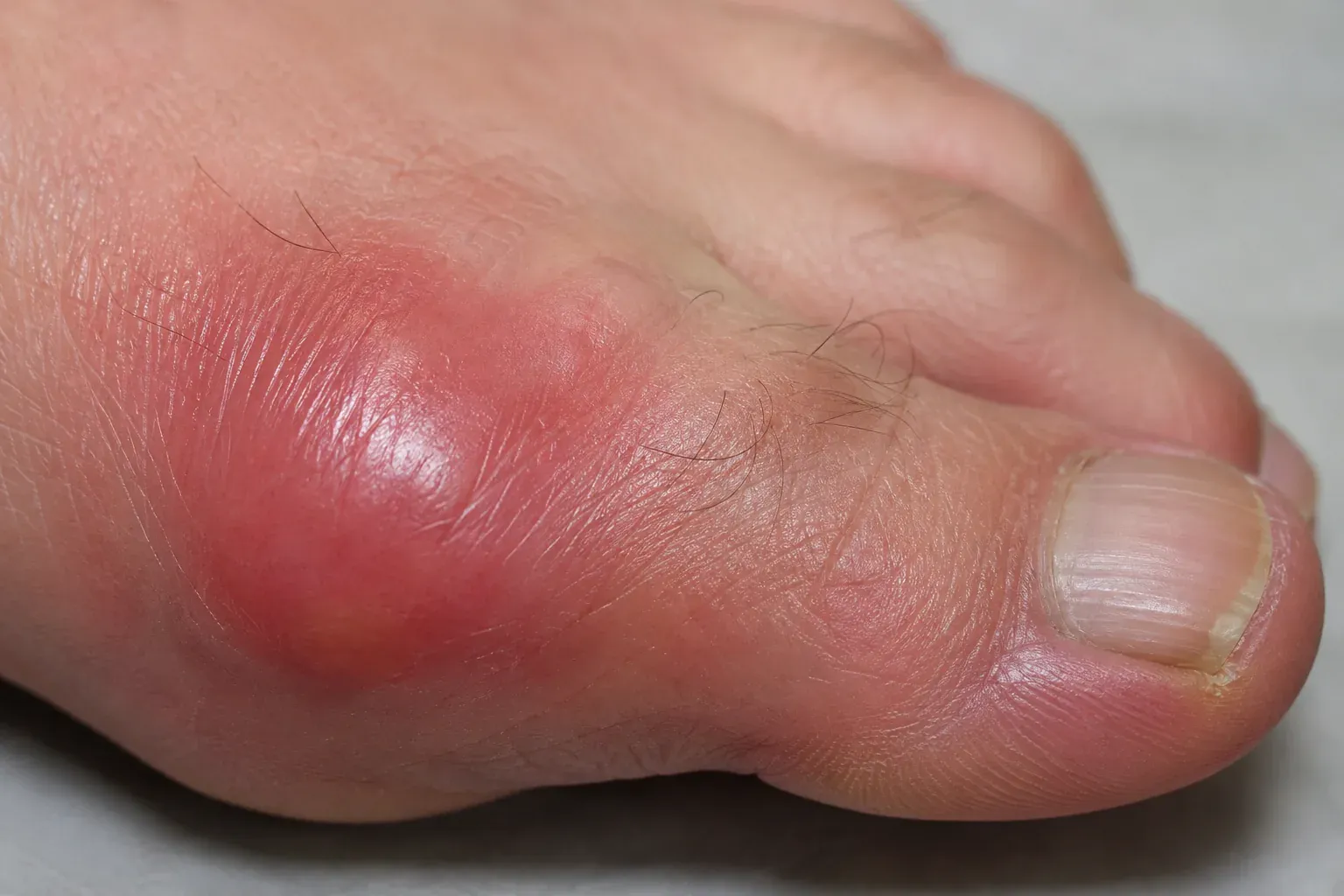
Call (281) 494-0572 promptly for: a joint that's suddenly hot, red, and severely painful, which may be gout or infection rather than routine arthritis. Urgent foot problems are worked into the schedule faster.
Treatment starts with the simplest option likely to work and escalates only when needed.
Stiff-soled or rocker-bottom shoes, carbon-fiber plates, and custom orthotics that let you walk without demanding motion from a worn joint. Often transformative for big-toe and midfoot arthritis.
Targeted anti-inflammatory strategies and precisely placed cortisone injections for flaring joints.
Keeping you moving with load your joints tolerate; motion is medicine for arthritis when dosed right.
From cheilectomy (removing spurs to restore big-toe motion) to fusion or joint replacement for end-stage joints, discussed with honest trade-offs and timelines.
Good, in the right dose and shoes. Motion nourishes cartilage and keeps joints from stiffening; overload flares them. The trick is footwear that shields the worn joint (rocker soles are quietly miraculous) and increments your joints accept.
Arthritis of the big toe joint, the foot's most common form. The toe progressively loses upward bend, making push-off painful; a bone spur on top often rubs shoes. Early cases do very well with stiff-soled shoes and orthotic plates; advanced ones have good surgical options.
Used judiciously, they're a legitimate tool for flares; used repeatedly as the whole plan, they can accelerate cartilage wear. We place them precisely, space them responsibly, and pair them with the mechanical changes that reduce the need for the next one.
One is mechanical wear; the other is an immune system attacking its own joints. Feet often reveal which is which first.
Read the article →Fine at bedtime, on fire by 3 a.m.: the classic gout attack has good reasons for its timing and its target.
Read the article →Ball-of-foot pain has a crowded suspect list. Nerve or bone-and-joint is the first fork, and the treatments diverge from there.
Read the article →One visit at our Sugar Land office gets you a diagnosis and a plan. Call (281) 494-0572 or book online.