How Custom Orthotics Are Made: From Your Foot to the Finished Device
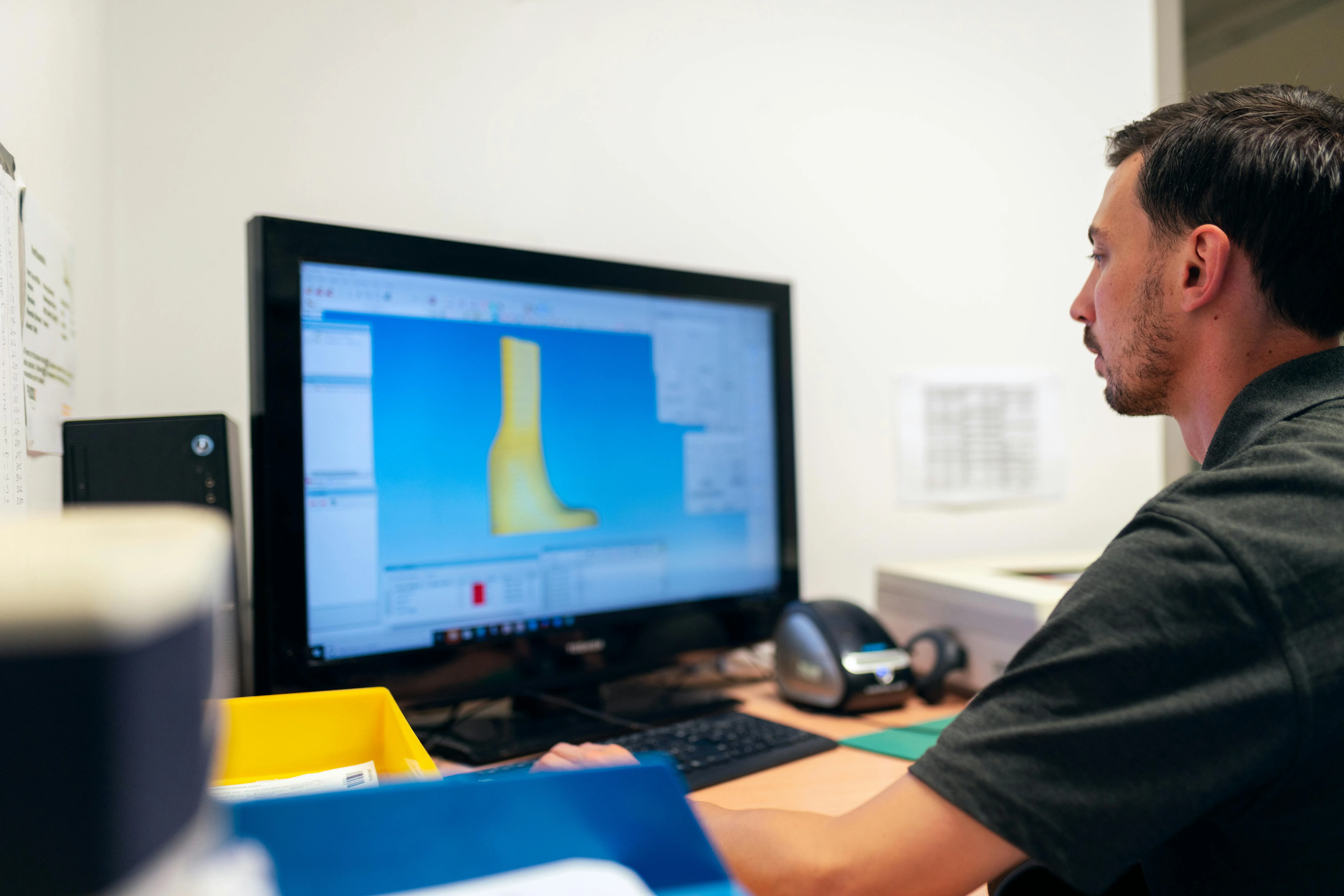
Ever wonder what the lab actually does with that mold of your foot? Here's the journey, and why each step earns its place.
Read the article →When a foot or ankle needs more support than any insole can give, an AFO is the next instrument: a custom brace that stabilizes the ankle itself, keeping people walking who otherwise couldn't do so safely or comfortably.
An AFO extends support above the ankle joint, controlling motion an orthotic can't reach. Depending on design, it can block painful motion (arthritis), substitute for weak muscles (drop foot, where it holds the foot up through swing phase), or unload failing structures (posterior tibial tendon dysfunction, where designs like the Arizona brace cradle the collapsing arch and take load off the tendon). Custom-molded from your leg, modern AFOs range from rigid supports to slim carbon-fiber struts that hide in a shoe.
AFOs earn their place when: pain persists despite orthotics, the ankle itself is the failing joint, muscles can't lift the foot, or surgery isn't desired or advisable. For progressive conditions like adult flatfoot, timely bracing can halt the slide and genuinely postpone or prevent surgery. They're a commitment (a device worn daily), so we prescribe them when they'll change your life, not just your X-ray.
The exam determines what the brace must do: block, assist, or unload, which drives the design, from rigid to articulated to carbon strut.
Your leg and foot are cast in corrected position; fabrication takes a few weeks, with footwear guidance so the brace has a home.
Fit verification, wear-schedule ramp-up, and a follow-up to adjust pressure points; a well-fit AFO should be forgettable by month's end.
There's an adaptation period of one to a few weeks as skin and gait adjust; break-in schedules prevent pressure sores, and shoe pairing matters (typically one size roomier). The functional payoff is immediate for most users: stability, endurance, and pain relief on day one, refining as fit is tuned.
AFOs manage conditions rather than cure them; remove the brace and the underlying problem remains. Skin pressure needs monitoring, especially with neuropathy, and footwear options narrow somewhat. For some conditions bracing is a permanent strategy; for others it's a bridge while healing or until surgery. We're explicit about which yours is.
Depends on the mission. Drop foot from permanent nerve injury: likely long-term, and the brace makes life normal. Posterior tibial tendinitis: often seasonal, bracing through healing then stepping down to orthotics. We define the exit plan, or the honest absence of one, upfront.
Most AFOs fit lace-up shoes a half to full size roomier, and slim carbon designs fit nearly anything with laces. Sandals and slim dress shoes are the honest casualties. Bring your preferred shoes to fitting and we'll engineer around them.
For serious indications, yes: custom devices are molded to your leg and built for your diagnosis, which is why they're comfortable enough to actually wear all day. Off-the-shelf braces have a place for short-term support; daily-driver bracing lives or dies on fit.
Ever wonder what the lab actually does with that mold of your foot? Here's the journey, and why each step earns its place.
Read the article →Brands change yearly; the features that help a strained fascia don't. Learn the checklist and every shoe store becomes easy.
Read the article →RICE is still the right first move after a foot or ankle injury. What comes next has changed more than most people know.
Read the article →One exam at our Sugar Land office answers it. Call (281) 494-0572 or book online.