Laser for Toenail Fungus: Reading Past the Marketing
Laser is a real tool for fungal nails, wrapped in more hype than any treatment deserves. Here's the signal without the noise.
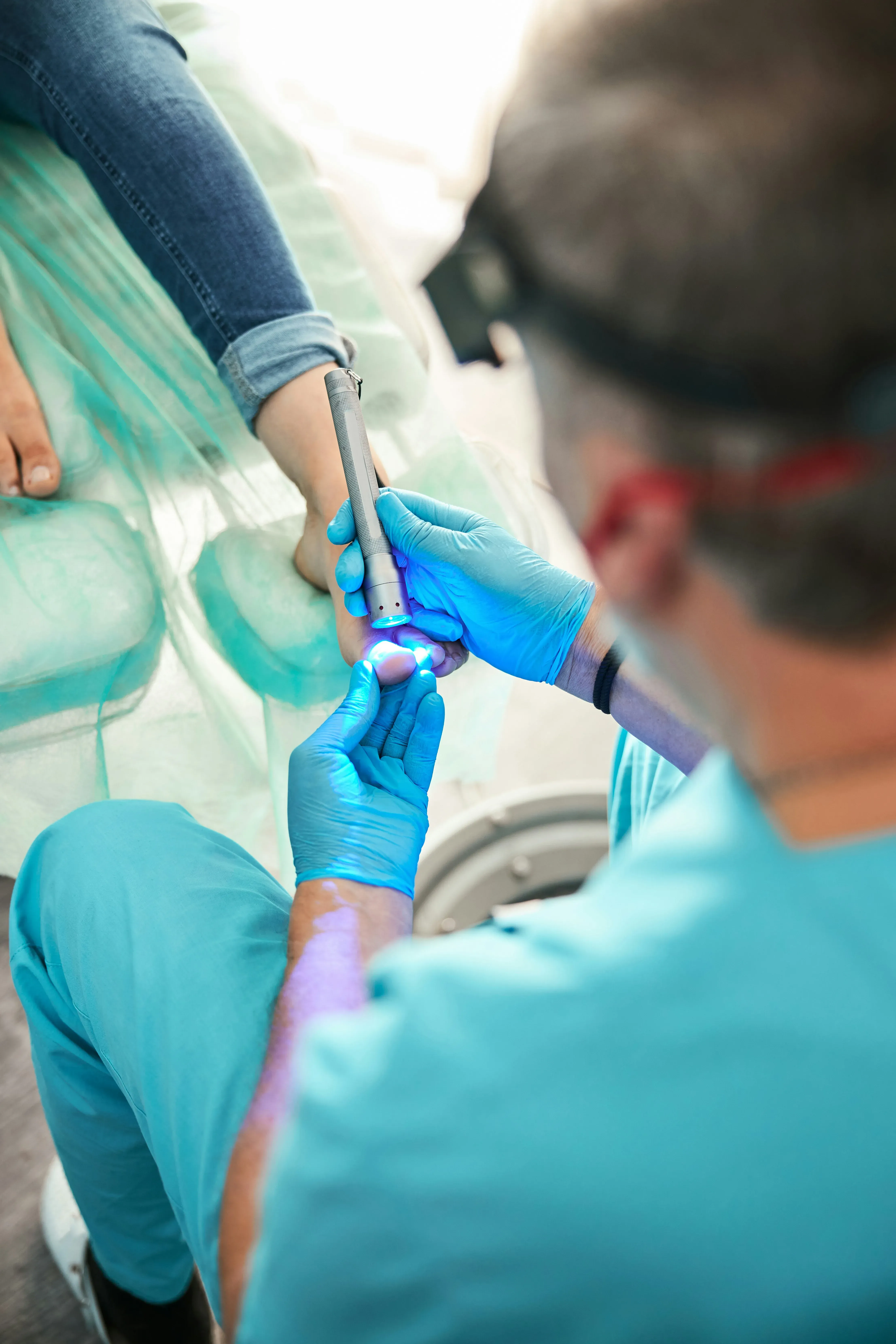
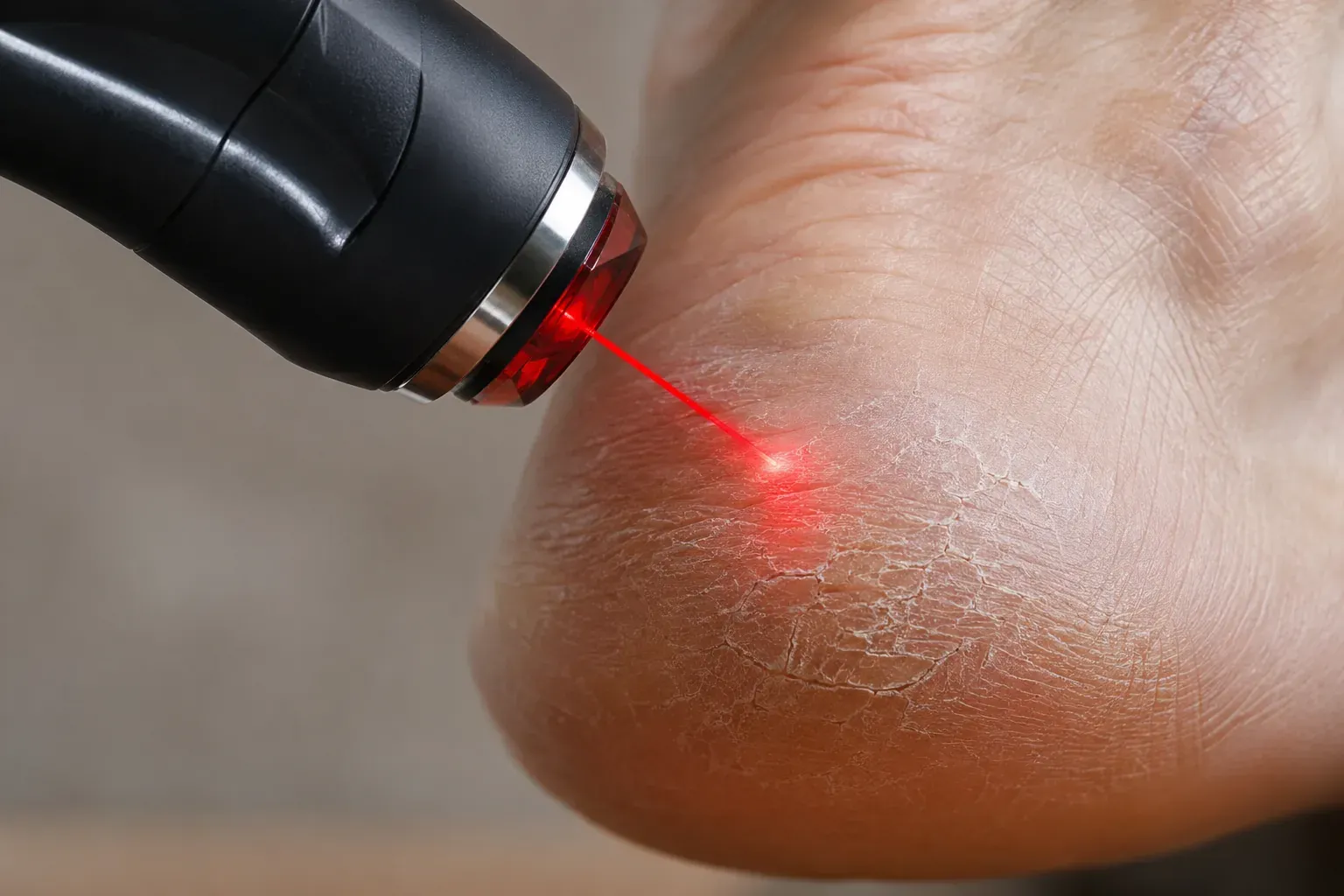
Read the article →Medical lasers earn their place in podiatry two ways: heating fungal nails from within to kill infection without months of medication, and stimulating sore tissue at doses that calm pain. No needles, no pills, no recovery time.
For fungal nails, the laser's wavelength passes through the nail plate and is absorbed preferentially by the fungus below, heating it past survivable temperatures while the surrounding nail and skin stay comfortable; the infection is cooked in place, and clear nail grows out behind it. For pain applications, lower-power laser (photobiomodulation) works differently: light energy absorbed by cellular chromophores nudges mitochondrial activity, modestly boosting circulation and dialing down inflammatory signaling in treated tissue.
For fungal nails, laser shines brightest where oral antifungals can't go: liver concerns, medication interactions, or simple preference against a 12-week systemic drug. For pain, it's a reasonable adjunct rather than a standalone cure. Confirmed diagnosis first in both cases, since lasering a nail that isn't fungal or a pain that isn't inflammatory wastes everyone's time.
Nail testing verifies fungus before committing to treatment; pain applications get the same exam-first discipline.
Nail sessions take 15 to 30 minutes for all ten toes, feeling like spreading warmth with occasional hot pinpricks, no anesthesia needed. A course typically involves a few sessions spaced weeks apart.
For nails, results appear as new clear growth from the base over months (nails grow slowly), tracked with photos, paired with shoe hygiene so reinfection doesn't undo the work.
None; you walk in, get treated, walk out, and nothing is restricted. Nail improvement is a patience game measured in months of growth, not days; pain applications, when they respond, typically do so over a series of sessions.
Side effects are minimal: transient warmth, rare temporary redness. The honest part: for fungal nails, oral terbinafine remains the single most effective treatment on published cure rates, with laser a legitimate medication-free alternative whose results vary more between patients. Insurance treats nail laser as cosmetic, so it's self-pay, quoted upfront. For pain, laser assists good treatment; it doesn't replace mechanics correction.
It can substantially clear infections, with visible improvement in a majority of treated nails, though published results vary more than oral medication's. It's the strongest option for people who can't or won't take orals, and it pairs well with debridement and topical care.
Typically 2 to 4 sessions spaced several weeks apart, then months of watching clear nail grow out; a big toenail takes 9 to 12 months to fully replace itself. We photo-document so progress is visible rather than guessed.
No anesthesia needed: you'll feel warmth building and occasional sharp warm pinpricks, and the laser pauses anytime it's too much. Most patients read their phone through it.
Laser is a real tool for fungal nails, wrapped in more hype than any treatment deserves. Here's the signal without the noise.
Read the article →Warts persist by hiding from your immune system. Swift's trick is blowing their cover.
Read the article →One suppresses your biology; the other concentrates it. Choosing correctly depends on which question your foot is asking.
Read the article →One exam at our Sugar Land office answers it. Call (281) 494-0572 or book online.